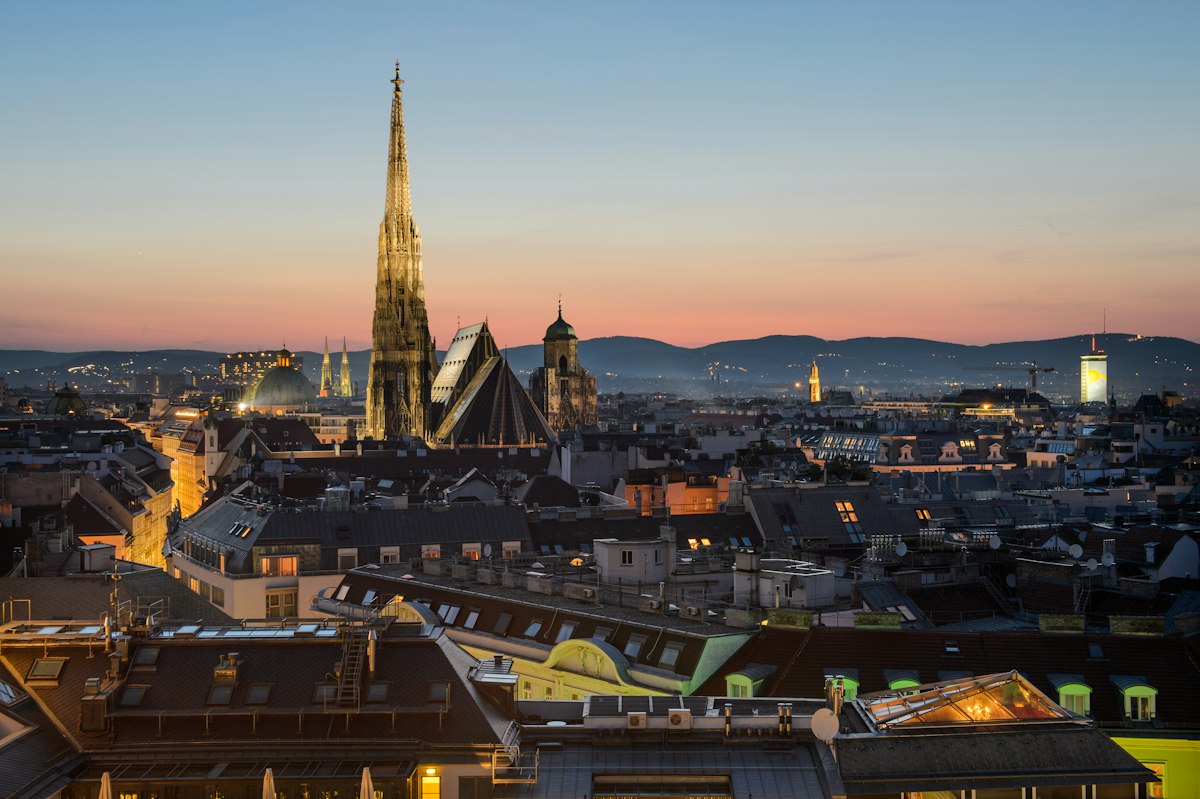
Budapest, Prague and Vienna form one of the great travel triangles in Europe — three imperial capitals within 350km of each other, each shaped by the Habsburg era, each with a monumental architectural heritage, great food scenes, extraordinary classical music traditions and old-town centres so beautiful that you find yourself stopping mid-stride just to look. The question of which to visit first is genuinely one of the more pleasant travel decisions to have to make.
This guide is the honest comparison — not a glossy overview of all three but a practical answer to the question that most people are actually asking: given limited time and budget, which city should I prioritise, and what does each one actually feel like to visit?
🌍 Budapest vs Prague vs Vienna — The Short Answer
Vienna for grandeur, culture and the most complete Habsburg experience. Prague for medieval beauty, atmosphere and the best value of the three. Budapest for thermal baths, the Danube, ruin bars and a raw energy that Vienna and Prague do not have. If you can only choose one: Prague for a first time, Budapest for a second, Vienna for classical culture.
The Head-to-Head Comparison
| Category | 🇦🇹 Vienna | 🇨🇿 Prague | 🇭🇺 Budapest |
|---|---|---|---|
| 💰 Daily cost | $150–$300 | $80–$180 | $80–$170 |
| 🏛️ Architecture | World-class imperial | Medieval — best preserved | Art Nouveau + Gothic |
| 🍽️ Food scene | Excellent (Viennese cuisine) | Good (improving fast) | Excellent (Eastern European) |
| 🎵 Classical music | Unmatched globally | Excellent | Very good |
| 🛁 Thermal baths | Some (Roman-era) | None significant | World's best |
| 🍺 Nightlife | Good — formal/upscale | Good — backpacker | Best — ruin bars iconic |
| 👥 Crowds | Moderate | Very crowded | Moderate |
| 🌐 English spoken | Widely | Well (tourist areas) | Reasonably well |
| 🚂 Transport links | Best — major hub | Good | Good |
| ✈️ Best for | Culture, music, museums | Atmosphere, romance | Baths, food, nightlife |
🇦🇹 Vienna — The Imperial Capital
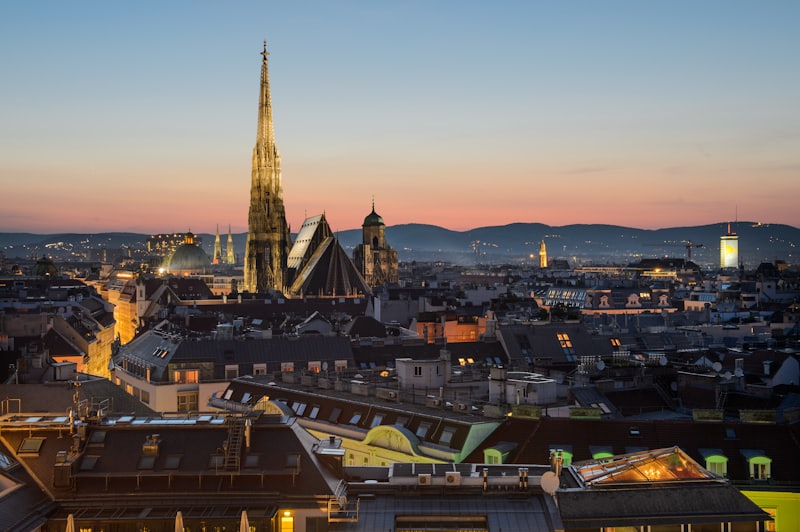
Vienna is the city that the Habsburg Empire built to show the world what absolute power looks like when combined with extraordinary aesthetic ambition. The Kunsthistorisches Museum has one of the world's great art collections. The Schönbrunn Palace has 1,441 rooms. The Vienna State Opera is the world's finest opera house, still staging productions that have been in the repertoire for over a century. The Naschmarkt is Central Europe's most atmospheric food market. And Viennese café culture — spending two hours over a melange coffee and a slice of Sachertorte while reading the newspaper — is one of the world's great urban rituals.
Vienna Is Right for You If...
- Classical music is important — Vienna is the undisputed world capital of classical music, with concerts available every night ranging from $15 standing tickets at the State Opera to full orchestral performances
- Museums and art are priorities — the MuseumsQuartier is one of the world's great museum districts
- You want the most complete, most polished experience of the three cities
- You are travelling on a slightly higher budget — Vienna is consistently more expensive than Prague and Budapest
The One Thing Not to Miss in Vienna
Standing room tickets at the Vienna State Opera cost €4–13 and go on sale 80 minutes before the performance. Queue early, dress smartly and stand for 3 hours watching one of the world's great opera companies perform in the most beautiful opera house on earth. Nothing else in Vienna compares to the value.
🇨🇿 Prague — The Medieval Marvel
Prague is the best-preserved medieval city in Central Europe — 1,000 years of architecture largely untouched by World War II bombing, with a castle complex on a hill above the river, a Gothic cathedral, a Baroque bridge covered in statues and an old town square with an astronomical clock that has been ticking since 1410. It looks exactly like a film set for a fairy tale. The problem is that 8 million tourists arrive every year and much of the city's tourist infrastructure has organised itself around extracting maximum money from them with minimum effort at quality.
Prague Is Right for You If...
- Medieval architecture and atmosphere are the priority — Prague's old town is incomparable
- Budget is a concern — Prague is the most affordable of the three in accommodation and food (if you eat away from the tourist centre)
- You want a city that is easy and manageable — compact, very walkable, English widely spoken
- Romance is on the agenda — Prague at dawn on Charles Bridge before the tour groups arrive is one of Europe's most beautiful urban moments
The Critical Prague Warning
The tourist restaurants along Old Town Square and the routes between major landmarks charge 3–5x what local restaurants charge for significantly lower quality food. Cross the river to Žižkov or Vinohrady for authentic Czech food at Czech prices. The Czech beer is genuinely extraordinary and costs CZK 40–60 ($1.80–2.70) at a local pub — one of the world's great value experiences.
🇭🇺 Budapest — The Hidden Gem That Is Not That Hidden Anymore
Budapest is arguably the most exciting of the three cities right now — a place that still has rough edges and genuine energy that Vienna's perfection and Prague's tourist saturation have lost. The city sits on both sides of the Danube — hilly Buda on the west with its castle and medieval streets, flat Pest on the east with its Art Nouveau architecture, the great covered market and the ruin bars. The view of the Hungarian Parliament from the Buda side at night — the most beautiful neo-Gothic building in the world, reflected in the Danube — is one of Europe's great urban views.
Budapest Is Right for You If...
- The thermal baths are a priority — Budapest has the world's greatest collection of thermal bath complexes. The Széchenyi Baths (yellow neo-baroque palace with outdoor pools) and Gellért Baths (Art Nouveau masterpiece) are extraordinary
- Nightlife matters — Budapest's ruin bars (bars built in abandoned buildings and courtyards — Szimpla Kert being the most famous) are genuinely unlike anything in Vienna or Prague
- Food is important — Budapest's food scene is the best of the three, with excellent Hungarian cuisine (goulash, lángos, pörkölt) plus a fast-developing fine dining scene at very reasonable prices
- You want drama and contrast — Budapest is bigger, more complex and in some ways more rewarding than the more immediately polished Vienna and Prague
Suggested Itinerary — All Three Cities in 10 Days
1–3
Schönbrunn Palace, Kunsthistorisches Museum, Naschmarkt. Standing room opera tickets on one evening. Belvedere Palace for Klimt's The Kiss. Coffee at Café Central or Café Hawelka. 3 nights is the right amount.
4–6
Hungarian Parliament exterior at sunset. Széchenyi thermal bath (morning, before crowds). Ruin bar evening at Szimpla Kert. Castle Hill and Fisherman's Bastion for the Danube panorama. Great Market Hall for food. 3 nights minimum.
7–10
Charles Bridge at dawn (5:30am — empty and extraordinary). Prague Castle complex (half a day). Old Town Square astronomical clock. Vinohrady or Žižkov for local pub and Czech beer. Jewish Quarter. 4 nights captures everything at a relaxed pace.
Cost Comparison 2026
| Item | 🇦🇹 Vienna | 🇨🇿 Prague | 🇭🇺 Budapest |
|---|---|---|---|
| Budget hotel/night | €80–€130 | €45–€90 | €40–€85 |
| Mid-range hotel/night | €150–€280 | €90–€180 | €85–€170 |
| Restaurant meal (local) | €15–€30 | €8–€18 | €8–€20 |
| Beer (local pub) | €4–€6 | CZK 40–60 (€1.60–€2.40) | HUF 700–900 (€1.80–€2.30) |
| Museum entry (average) | €15–€22 | €10–€15 | €8–€15 |
| Thermal bath entry (Budapest) | N/A | N/A | €20–€30 |
| Opera standing room (Vienna) | €4–€13 | N/A | N/A |
| Daily total (mid-range) | €150–€300 | €80–€180 | €80–€170 |
Best Time to Visit All Three Cities
🚫 Central Europe Mistakes to Avoid
Prague receives 8 million tourists per year — more than the Czech Republic's entire population — and the concentration in the historic centre in peak summer is genuinely overwhelming. Charles Bridge at 11am in August has shoulder-to-shoulder crowds making it impossible to appreciate. Charles Bridge at 5:30am has virtually nobody. Going to see the Astronomical Clock at noon means standing in a heaving crowd watching it for 30 seconds. Going to see it in the evening means watching it with almost no one else. Adjust your schedule and you experience a completely different and far more rewarding Prague.
Standing room tickets at the Vienna State Opera are €4–13, go on sale 80 minutes before the performance and require queuing. You stand for 3 hours on padded rails with a small shelf for your programme. What you get in return is a world-class opera company performing in the most beautiful opera house on earth for less than the cost of a coffee in central Vienna. It is one of the great travel experiences in Europe and most first-time Vienna visitors skip it because it sounds unfamiliar. Do not skip it.
Szimpla Kert is the most famous ruin bar and the one that appears in every travel guide — which means it is now the most tourist-heavy ruin bar and sometimes feels like an experience designed for tourists rather than a genuine Budapest social institution. Walk 10 minutes from Szimpla into the surrounding 7th district and you will find ruin bars and courtyard bars that are less polished, cheaper and frequented primarily by Budapestians rather than tour groups. Ellátó Kert, Kőleves Kert and Instant are all excellent and feel more like the original ruin bar spirit.
Budapest's thermal baths are the city's defining experience and the one that most first-time visitors either skip or visit reluctantly once. Széchenyi Thermal Bath in particular — a neo-baroque palace with outdoor pools at 38°C, Hungarians playing chess on floating boards, steam rising into the winter sky — is one of the most extraordinary travel experiences in Central Europe. Book your ticket online in advance. Bring a towel, a swimming costume and flip flops. Stay for at least 2 hours. You will immediately regret not having booked for every day of your Budapest stay.
🌍 Top Hotels — Vienna, Prague & Budapest
All hotels →🔗 Useful Official Links
🇦🇹❓ Frequently Asked Questions
Vienna for imperial grandeur and classical music. Prague for medieval architecture, atmosphere and best value. Budapest for thermal baths, ruin bars and the Danube skyline. For a first visit: Prague. For a second: Budapest. For culture: Vienna.
Prague and Budapest are broadly similar — both significantly cheaper than Vienna. Mid-range daily: Vienna €150-300, Prague €80-180, Budapest €80-170. Beer in a local pub: Vienna €4-6, Prague/Budapest €1.60-2.40.
Yes — connected by train. Vienna-Budapest: 2.5 hours. Budapest-Prague: 6.5 hours (or 1 hour flight). Prague-Vienna: 4 hours. Ideal 10-day route: fly into Vienna → train Budapest → train/fly Prague → fly home.
All three: minimum 3 days, ideally 4. Vienna rewards extra time for its extraordinary museum concentration. Prague is compact and manageable in 3-4 days. Budapest needs 4 days to do the baths, Danube, Castle Hill, Jewish Quarter and ruin bars properly.
Absolutely — the defining Budapest experience. Széchenyi (€20-30) is a neo-baroque palace with outdoor pools at 38°C. Book online, bring swimwear and towel, arrive early, stay 2+ hours. Most visitors say they wish they had gone every day.
April-June and September-October — warm weather, manageable crowds, lower prices. July-August very busy (especially Prague). December brings Vienna's extraordinary Christmas markets. January-February cheapest but cold.
€4-13 tickets that go on sale 80 minutes before the performance. Queue early, dress smartly, stand for 3 hours on padded rails. You watch a world-class opera company in the most beautiful opera house on earth for less than a coffee in central Vienna. Unmissable.
Austria, Czech Republic and Hungary are all Schengen Area members. UK, US, Canadian and Australian citizens enter visa-free for up to 90 days within any 180-day Schengen period. No advance application required.
📚 More Europe Comparison Guides
👉Barcelona vs Seville vs Madrid — Which Spanish City First?Read → 👉Santorini vs Mykonos — Which Greek Island in 2026?Read → 👉Norway vs Iceland — Which Scandinavian Trip Is Worth It?Read → 👉How to Travel Europe by Train — The Complete 2026 GuideRead →🛠️ Free Planning Tools
Calculate your exact budget
Check your entry requirements
Best time to visit
What to pack for your trip
Convert to local currency
We research every destination thoroughly — honest, practical guides with no fluff, no sponsored opinions. Just real advice that helps you travel smarter.
Found this helpful? Share it! 😊
Get Free Travel Tips Every Week
Honest destination guides, money-saving tips and first-timer advice — every week.
No spam ever. Unsubscribe anytime.
📖 More Europe Guides
✅ Final Verdict
Budapest, Prague and Vienna are three of Europe's most rewarding cities — different enough to feel genuinely distinct, close enough to see all three in a 10-day trip. If you are choosing just one for your first visit, go to Prague for the medieval beauty that nowhere else in Europe matches. If you are choosing a second Central European city, go to Budapest for the thermal baths, the Danube at night and the ruin bars that are genuinely unlike anything else on the continent. Vienna is for when you are ready to stand in the world's greatest opera house for €7 and feel like the Habsburg Empire never really ended. Start planning at smarttravelplannr.com 🌍