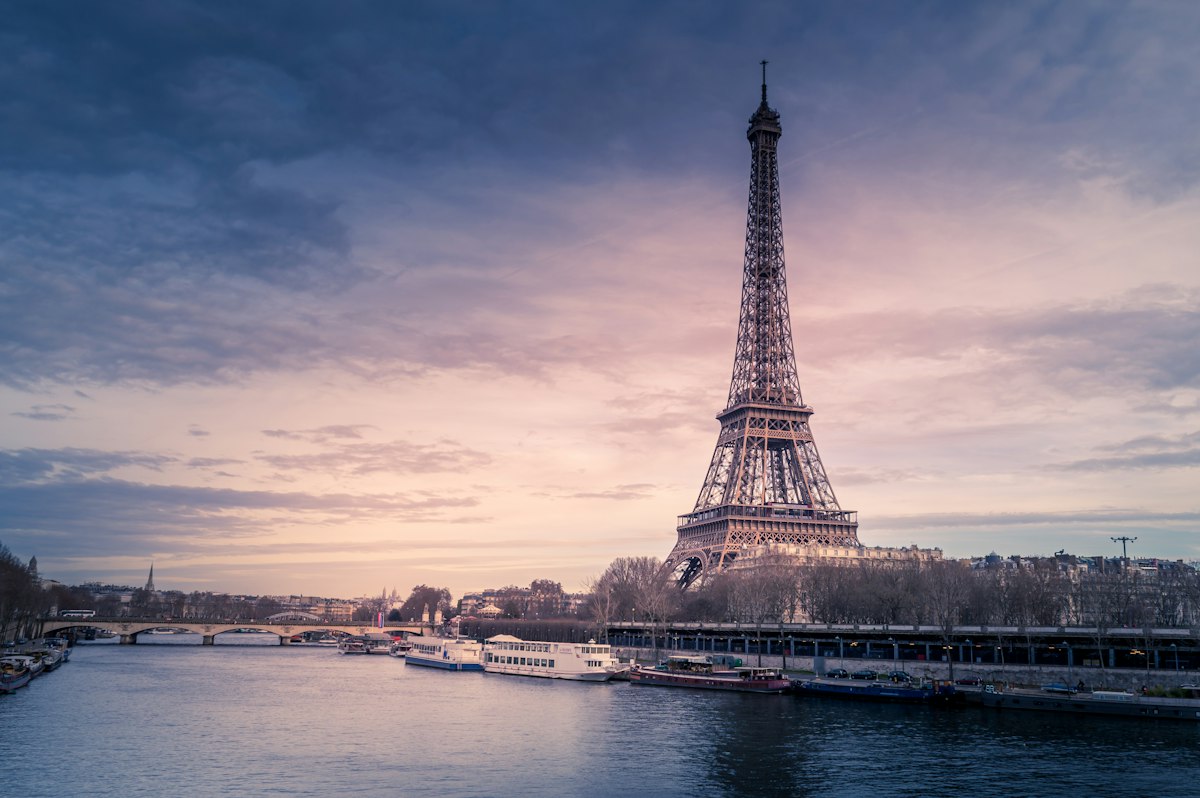
Paris has been the world's most visited city for decades — and for good reason. It is extraordinary, over-photographed, occasionally overwhelming, sometimes frustrating on the surface and genuinely magnificent once you stop trying to see everything on a list and start actually living in it for a few days. The Eiffel Tower is more beautiful in person than any photograph shows. The food really is as good as people say. And the museum collections — the Louvre, the Musée d'Orsay, the Rodin garden — are among the greatest in human history.
This guide is for first-time visitors who want to do Paris properly — not rush the highlights, not overpay for tourist traps, not spend three days in queues. Here is exactly what to do, what to skip, what to eat and how to move through the city the way Parisians do.
🗼 Paris for First Timers — The One Rule
Walk more than you plan to. Paris's greatest pleasures — the cafe on a corner you did not expect, the courtyard behind a door, the view from a bridge you stopped on without planning to — are discovered on foot, not on a bus tour itinerary. Build in unscheduled time. The city rewards it.
Paris at a Glance
| Category | Details |
|---|---|
| 💰 Currency | Euro (€) — approx €0.92 per USD, €1.18 per GBP in 2026 |
| 🛂 Visa | Schengen Area — UK, US, Canadian, Australian citizens: visa-free 90 days. ETIAS required for non-EU from 2026 (€7, apply at etias.com) |
| ✈️ Airports | CDG (Charles de Gaulle) — most international flights. ORY (Orly) — European budget flights. CDG is 45 min from central Paris by RER B train |
| 🚇 Transport | Paris Metro — 16 lines, covers the entire city, runs 05:30–01:15 (02:15 weekends). Buy a carnet of 10 tickets or use contactless payment |
| 📅 Best time | April–June and September–October — spring and autumn, manageable crowds, beautiful light |
| 🗣️ Language | French — a few words go a long way. "Bonjour" before any interaction. "Merci beaucoup." Never start with English without a greeting first |
🗼 The Eiffel Tower — How to Actually See It
The Eiffel Tower is worth seeing from every distance and angle — from the Trocadéro across the Seine (the classic view), from the Champ de Mars below, from the top (book the summit in advance at toureiffel.paris — queues without a booking are 2+ hours). The light show at night (every hour on the hour after dark, 5 minutes of sparkling lights) is free from any viewpoint on the bank. The best free Eiffel Tower views: Pont de Bir-Hakeim (the bridge with the pillars — where Inception was filmed), the rooftop bar at the Shangri-La hotel and the steps of Sacré-Cœur from Montmartre with the tower on the horizon.
🖼️ The Louvre — How to Do It Without Dying
The Louvre is the world's largest art museum — 73,000 works across 35,000 square metres. Attempting to "see the Louvre" is impossible in a single visit. The correct approach is to pick three things you genuinely want to see and spend real time with them. The Mona Lisa (smaller than expected, behind glass, in a room of people trying to photograph it — give it 5 minutes and move on), the Venus de Milo (one of the world's great sculptures — give it 20 minutes), the Winged Victory of Samothrace (at the top of a staircase, genuinely magnificent). Buy tickets at louvre.fr in advance — no queue, enters directly. Go on a Wednesday or Friday evening (open until 21:45) when day-trippers have left. Budget 2.5–3 hours maximum on your first visit.
🎨 The Musée d'Orsay — The Unmissable Alternative
The Musée d'Orsay is housed in a converted railway station on the Left Bank — the world's greatest collection of Impressionist art, including Monet's Water Lilies series, Van Gogh's Self-Portrait and Starry Night (Rhône), Renoir, Degas, Cézanne, Gauguin. It is smaller than the Louvre, more manageable and the quality is extraordinary throughout rather than concentrated in a few highlights. Book at musee-orsay.fr in advance. The clock rooms at the top of the building — looking across the Seine through the old station clock face — are one of Paris's great views.
🥐 What to Eat in Paris — The Actual Guide
Morning
- Croissant from a boulangerie — specifically one that is just out of the oven (ask "ils sont frais?" — "are they fresh?"). A good croissant in Paris is deeply, memorably better than anything sold as a croissant outside France
- Café au lait at a zinc bar — stand at the bar, pay the bar price (significantly cheaper than sitting), drink it quickly the way Parisians do
- Pain au chocolat — not a croissant with chocolate inside but a fundamentally different pastry. Try both. Choose a side
Lunch and Dinner
- Steak frites — the quintessential French brasserie dish: a well-cooked steak, thin crispy frites, béarnaise sauce. Le Relais de l'Entrecôte (various locations, no reservations — queue) serves nothing else and is excellent
- Onion soup (soupe à l'oignon) — slow-cooked caramelised onions, beef broth, crouton, gruyère — at any traditional brasserie
- Duck confit (confit de canard) — slow-cooked duck leg, crispy skin, served with lentils or potatoes. One of the great dishes of French cuisine
- Crêpes at a street stall — Montmartre and Marais street crêpes — butter and sugar, ham and cheese, Nutella and banana
- Oysters at a street market — Rue Montorgueil and the covered markets have fresh oysters shucked to order for €1–2 each
Suggested Paris Itinerary
1
Morning: Trocadéro viewpoint then Eiffel Tower (booked summit visit). Lunch: café on Champ de Mars. Afternoon: Musée Rodin — Rodin's sculpture garden (The Thinker, The Kiss) is one of Paris's most peaceful experiences. Evening: walk Rue Cler market street. Eiffel Tower light show from Pont d'Iéna at 10pm.
2
Morning: Louvre (open at 09:00 — already booked online, no queue). Three chosen highlights, 2.5 hours max. Lunch: Café Marly (views over Louvre pyramid, expensive but worth it once). Afternoon: Le Marais neighbourhood — the Jewish Quarter on Rue des Rosiers, Place des Vosges (Paris's most beautiful square), Picasso Museum. Evening: aperitif at a Marais bar.
3
Morning: Montmartre — climb the steps at dawn before the crowds. Sacré-Cœur. Artists' square Place du Tertre. Breakfast in a Montmartre café. Afternoon: Musée d'Orsay (booked in advance). Evening: Sunset from Pont des Arts or Pont Neuf.
4
Option A: Versailles (45 min RER C from central Paris, €16 return). Book palace tickets at chateauversailles.fr — the Hall of Mirrors and gardens are extraordinary. Option B: Saint-Germain-des-Prés — the literary cafés (Café de Flore, Les Deux Magots), Shakespeare and Company bookshop, Sunday market on Boulevard Raspail.
Paris Cost Guide 2026
| Category | Budget | Mid-Range |
|---|---|---|
| 🛏️ Accommodation/night | €60–€100 (budget hotel/hostel) | €150–€280 (mid hotel) |
| 🥐 Boulangerie breakfast | €4–€7 — croissant, pain au chocolat, café | |
| 🍽️ Brasserie lunch (plat du jour) | €14–€18 — the best value in Paris, changes daily | |
| 🍽️ Restaurant dinner | €25–€45 | €55–€120 |
| 🎫 Louvre entry | €17 — free for under-18s and EU residents under 26 | |
| 🗼 Eiffel Tower summit | €28.30 adult — book at toureiffel.paris | |
| 🚇 Metro journey | €2.15 single, €17.35 for 10 tickets (carnet) | |
| Daily total | €100–€160 | €220–€380 |
Best Time to Visit Paris
🚫 Paris Mistakes First Timers Make
The restaurants within 200 metres of the Eiffel Tower, the Louvre and Notre-Dame are uniformly overpriced for the quality. Walk one or two streets further in any direction and the quality improves dramatically while the prices drop. A brasserie with a handwritten daily menu (plat du jour, typically €14–18 for a complete main course) is always better than a printed tourist menu with photographs. The plat du jour rule is one of the most reliable eating strategies in France.
The Louvre without a pre-booked ticket means queuing at the pyramid entrance for 45–90 minutes, then queuing again at the security inside. With a timed-entry ticket from louvre.fr you enter through the Carrousel du Louvre entrance with essentially no wait. The Eiffel Tower summit sells out weeks in advance in peak season. Versailles needs booking 2–4 weeks ahead. Every major Paris site has an online booking system — use all of them.
"Bonjour" (before noon) or "Bonsoir" (evening) before any interaction transforms how Parisians respond to tourists. Walking into a shop or approaching a waiter and immediately speaking English is considered rude in French culture. A greeting first — even if your French ends there — immediately changes the register of the interaction. "Bonjour, excusez-moi, parlez-vous anglais?" will get you significantly further than "Hey, do you speak English?"
The Louvre and the Musée d'Orsay are world-class and worth visiting. But Paris's street life — the covered passages, the Sunday markets, the canal Saint-Martin, a walk along the Seine at sunset, sitting with a glass of wine in Place des Vosges — is equally extraordinary and costs almost nothing. Build at least one full afternoon of pure, unscheduled walking into every two days you spend in Paris. The city rewards this more than almost any place on earth.
🗼 Top Hotels in Paris
All hotels →🔗 Essential Paris Links
🗼❓ Frequently Asked Questions
Minimum 3 full days for a first visit — covers the Eiffel Tower, Louvre, Musée d'Orsay, Montmartre and Le Marais. 4–5 days is ideal and allows a Versailles day trip, more relaxed museum visits and time to discover neighbourhoods on foot.
UK, US, Canadian and Australian citizens enter France (Schengen Area) visa-free for up to 90 days in any 180-day period. From 2026, an ETIAS pre-travel authorisation (€7) is required — apply at etias.com before travel. Very straightforward online process.
Budget travellers manage €100-160 per day. Mid-range is €220-380. The biggest cost is accommodation — central Paris hotels are expensive. Eating the plat du jour (daily special) at brasseries for €14-18, using the Metro and booking museum tickets in advance keeps costs manageable.
April-June (spring) is the best overall — café terraces open, long evenings, beautiful light. September-October is excellent with fewer tourists than summer. Christmas is magical. July-August is peak tourist season but many Parisians are away, making some parts of the city quieter than expected.
RER B train — the fastest and cheapest option. Takes 45 minutes to Gare du Nord from CDG Terminal 2, costs €11.80. Runs every 10-15 minutes, 24 hours. Taxis take 45-75 minutes depending on traffic and cost €55-75. Uber is available at similar prices.
French. Always start any interaction with 'Bonjour' (morning/afternoon) or 'Bonsoir' (evening). Then 'excusez-moi, parlez-vous anglais?' (excuse me, do you speak English?). This simple courtesy transforms interactions with Parisians who are often portrayed as unfriendly but are typically quite warm to visitors who make a small effort.
Yes — Paris is a major safe European capital. The main risks are pickpocketing (particularly on the Metro, around the Eiffel Tower and Sacré-Cœur, and at tourist sites) and occasional street scams. Keep your belongings secure, be aware in crowded areas and ignore anyone who approaches you with a clipboard or a petition near tourist attractions.
ETIAS (European Travel Information and Authorisation System) is a new pre-travel authorisation for non-EU visitors to the Schengen Area, introduced in 2026. UK, US, Canadian and Australian citizens need an ETIAS (€7, valid 3 years) to enter France. Apply at etias.com before your trip — straightforward online process.
📚 More Europe Guides
👉Budapest vs Prague vs Vienna — Which Central European City First?Read → 👉How to Travel Europe by Train — Complete Guide 2026Read → 👉Lisbon for First Timers 2026 — Is It Worth the Hype?Read → 👉Italy Travel Guide for First Timers 2026Read →🛠️ Free Planning Tools
Work out your exact budget
Check your entry requirements
Best time to visit anywhere
Never forget anything again
Convert to local currency
We research every destination thoroughly — honest, practical guides with no fluff, no sponsored opinions. Just real advice that helps you travel smarter.
Found this helpful? Share it! 😊
Get Free Travel Tips Every Week
Honest destination guides, money-saving tips and first-timer advice — straight to your inbox.
No spam ever. Unsubscribe anytime.
📖 More Europe Guides
✅ Final Verdict
Paris is the city people never stop going back to — because every visit reveals something they missed last time. The croissant on the first morning, the moment the Eiffel Tower starts sparkling at 11pm, the painting you stand in front of for twenty minutes in the Musée d'Orsay, the corner café where the waiter remembers your order by the third morning. It rewards those who slow down, say bonjour first and let the city happen to them as much as they happen to it. Start planning at smarttravelplannr.com 🗼