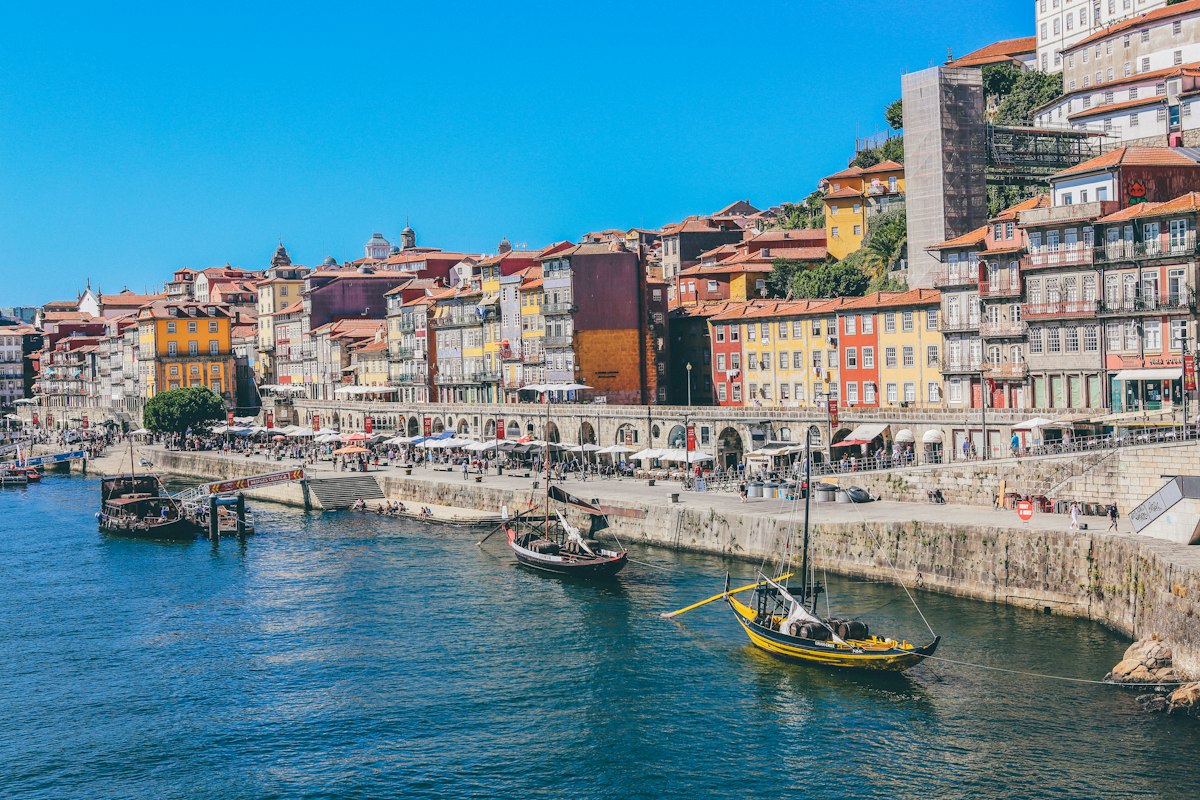
Portugal is one of the few European countries where a road trip genuinely makes more sense than any other way of seeing it. The train network is good between cities but misses most of the country's best places entirely — the wild Alentejo plains, the cliff-edge Algarve beaches, the vine-terraced Douro Valley, the fortified towns of the north that most visitors never reach. To see the Portugal that rewarded the people who are already planning their fourth visit, you need a car.
This is the route. Two weeks, north to south, with the detours that make the difference between a good trip and the kind that changes how you think about Europe.
🇵🇹 Portugal Road Trip — Who This Route Is For
This works for first-time Portugal visitors and returning visitors who want to see beyond Lisbon and Porto. It requires a driving licence, comfortable driving on narrow roads, and willingness to park and walk into villages that no tour bus visits. The reward is the real Portugal — the one the people who keep coming back are actually coming back for.
Planning Your Portugal Road Trip
Car Hire
Pick up in Porto, drop off in Faro (Algarve) — this avoids backtracking and gives you the natural north-to-south flow of the country. Book in advance through Kiwi.com or direct with Europcar / Hertz. A small automatic (essential on Lisbon hills and Algarve cliffs) costs €25–45 per day booked in advance. Avoid last-minute bookings — prices triple. Portuguese motorways (A-roads) require an electronic toll pass (Via Verde) — rental companies provide one, but check and confirm before you drive.
Driving in Portugal
- Speed limits: 50km/h urban, 90km/h regional roads, 120km/h motorways
- Road quality: Excellent on main roads. Rural roads can be narrow, single-lane and unpaved at the end — check offline maps before venturing off-route
- Parking in Lisbon: Use underground car parks — street parking in central Lisbon is either impossible or expensive. Park and use the metro or tram
- Petrol: Fill up in towns rather than motorway stations — 15–20 cents per litre cheaper
The Route — Two Weeks North to South
1–3
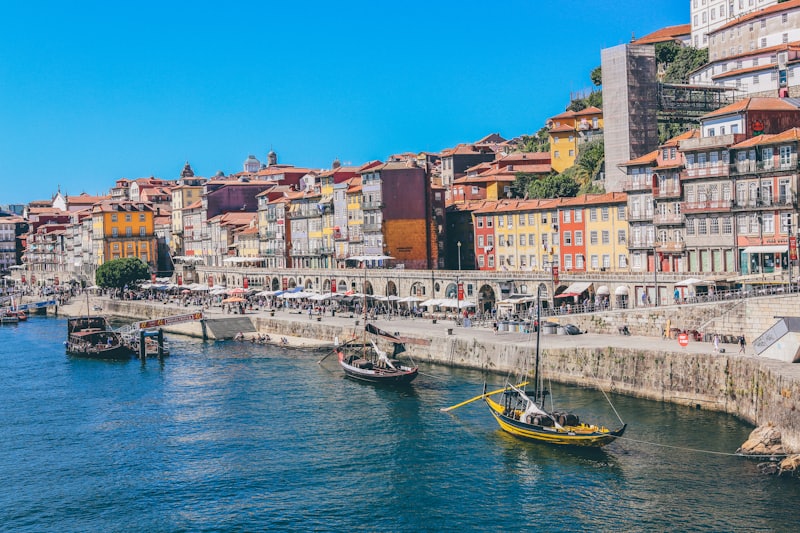
Fly into Porto (OPO). Pick up car. Park near the river and don't move it for 3 days. Walk the Ribeira waterfront, cross the Dom Luís I Bridge to Vila Nova de Gaia for port wine cellars. Livraria Lello bookshop. Tiles everywhere. A francesinha (Porto's artery-challenging signature sandwich of cured meats, melted cheese and spiced tomato-beer sauce) at least once. The Porto food scene has become one of southern Europe's best — book a table at restaurant Antiqvvm or Cantinho do Avillez for dinner on day 2 or 3.
4
The Douro Valley — 90 minutes east of Porto — is one of Europe's most beautiful wine landscapes. Steep terraced vineyards dropping to the river, quintas (wine estates) built into the hillsides. Drive the N222 from Peso da Régua to Pinhão — consistently voted one of the world's most scenic roads. Stop at a quinta for a tasting ($8–15 per person). Return to Porto for the night or stay in a quinta with river views.
5–6
Guimarães is where Portugal was born — a medieval walled old town, UNESCO listed, and almost entirely absent from most tourists' Portugal itineraries. The castle, the palace of the Dukes, the streets of the historic centre. 45 minutes further, Braga has the most extraordinary baroque staircase in the country at Bom Jesus do Monte and a city centre that feels like the real working Portugal that Lisbon has gradually priced out.
7–9
Drive south (3.5 hours Porto to Lisbon). Park the car and leave it. Lisbon on foot and by tram. Alfama district at dawn before the coaches arrive. Belém for the Torre and the Mosteiro dos Jerónimos (most beautiful Gothic monastery in Portugal) — go early. Pastéis de Belém for custard tarts. Time Out Market for a night. Day trip by car to Sintra — 40 minutes west, fairy-tale palaces on forested hills that are genuinely unlike anything else in Europe.
10–11
Drive southeast (2 hours) into the Alentejo — a vast, rolling landscape of cork oak, olive and vine that feels like the interior of Tuscany but with a third of the visitors and better prices. Évora has a 1st century Roman temple in its central square (extraordinary), a UNESCO medieval centre and the Chapel of Bones — walls and pillars constructed from the bones of 5,000 monks. Alentejo red wine and black pork are reasons enough to spend a night here.
12–14
Drive south into the Algarve (1.5 hours from Évora). Sagres at the southwestern tip of Europe — clifftop fortress, wild Atlantic, the end of the known world as the Portuguese explorers understood it. Drive east along the N125 cliff road — Praia da Marinha, Praia de Benagil (kayak or boat into the sea cave), Carvoeiro, Albufeira. End in Faro. Return the car. Fly home.
Portugal Road Trip Cost Guide
| Category | Budget | Mid-Range |
|---|---|---|
| 🚗 Car hire (14 days, small auto) | €300–450 booked early | €500–700 |
| ⛽ Petrol (full route, ~1,800km) | €130–170 — petrol is cheaper in Portugal than UK/Germany | |
| 🏨 Accommodation/night | €30–60 (pensão/hostel) | €70–140 (hotel/quinta) |
| 🍽️ Dinner with wine | €12–20 per person | €25–50 per person |
| 🍮 Pastel de nata | €1.20–1.80 — eat them constantly, everywhere, without guilt | |
| Daily total per person | €65–100 | €130–220 |
🚫 Portugal Road Trip Mistakes
The Alentejo is the part of Portugal that people who have been four times say is the reason they keep returning. Évora is extraordinary. The pousadas (converted historical properties — monasteries, castles) are some of the best hotel experiences in Europe. The wine and the food are as good as anything in the country. Two days in the Alentejo will stay with you longer than a third day in Lisbon.
Sintra receives several thousand visitors per day in summer. Arriving at 10–11am means queuing for an hour at every palace and walking in a crowd for the rest. Arrive at 8:30am when the sites open, do the Palácio Nacional da Pena first, walk down through the gardens and you are done before the coaches arrive. Sintra at 9am is genuinely magical. At noon it is an endurance exercise.
Benagil is one of the most photographed sea caves in Europe and cannot be reached on foot — you swim or kayak in from the adjacent beach. Swimming into Benagil through open Atlantic swell without experience is dangerous. Book a kayak tour ($25–35) or a small boat trip ($15–20) from Benagil beach — operators run them all day and the experience from inside the cave looking up through the natural oculus is worth every cent.
Best Time to Do a Portugal Road Trip
🇵🇹 Best Places to Stay on the Route
All hotels →🔗 Essential Portugal Links
🌐❓ Frequently Asked Questions
Two weeks is the ideal length for the Porto-to-Algarve north-south route. Ten days is the minimum if you want to include Porto, Douro Valley, Lisbon, Sintra, Alentejo and the Algarve cliffs without feeling rushed. A week limits you to either the north (Porto, Douro, Lisbon) or south (Lisbon, Alentejo, Algarve).
Yes — one of Europe's best road trip destinations. Roads are excellent, distances are manageable (Porto to Faro is 620km total), petrol is cheaper than the UK or Germany, and the route reveals destinations that trains and tour buses completely miss — the Douro Valley, Alentejo plains, and the western Algarve cliffs are all best accessed by car.
Porto → Douro Valley → Guimarães → Lisbon → Sintra → Alentejo (Évora) → Algarve (Sagres → east along the cliffs → Faro). This north-to-south one-way route avoids backtracking, covers all major highlights and reveals the parts of Portugal most visitors miss by flying in and out of Lisbon.
Budget travellers manage €65–100 per person per day including car hire share, fuel, accommodation and food. Mid-range is €130–220. The main costs are car hire (€300–450 for 14 days booked early) and accommodation. Food and drink are significantly cheaper than France, Spain or Italy.
No — a standard UK, EU, US, Canadian or Australian driving licence is valid in Portugal. An international driving permit is not required for most nationalities. Carry your driving licence, car hire documents and passport whenever driving.
April–June is the best overall — warm, flowers in bloom, pre-peak season crowds. September–October is excellent with harvest season in the Douro and beach weather still holding in the Algarve. Avoid July–August if you can — Alentejo temperatures hit 40°C and the Algarve is extremely crowded.
📚 More Portugal & Europe Guides
👉Portugal Travel Guide for First TimersRead → 👉Lisbon Travel Guide for First TimersRead → 👉How to Travel Europe by Train — Complete GuideRead → 👉Europe on a Budget — Complete Money-Saving GuideRead → 👉Barcelona vs Seville vs Madrid — Which Spanish City First?Read →🛠️ Free Trip Planning Tools
Work out your exact budget
Check entry requirements
149 world currencies
Never forget anything again
Best month for any destination
We research every destination honestly — practical guides with no fluff and no sponsored opinions.
Found this useful? Share it 😊
Get Free Travel Tips Every Week
Honest destination guides, money-saving tips and first-timer advice — straight to your inbox.
No spam. Unsubscribe anytime.