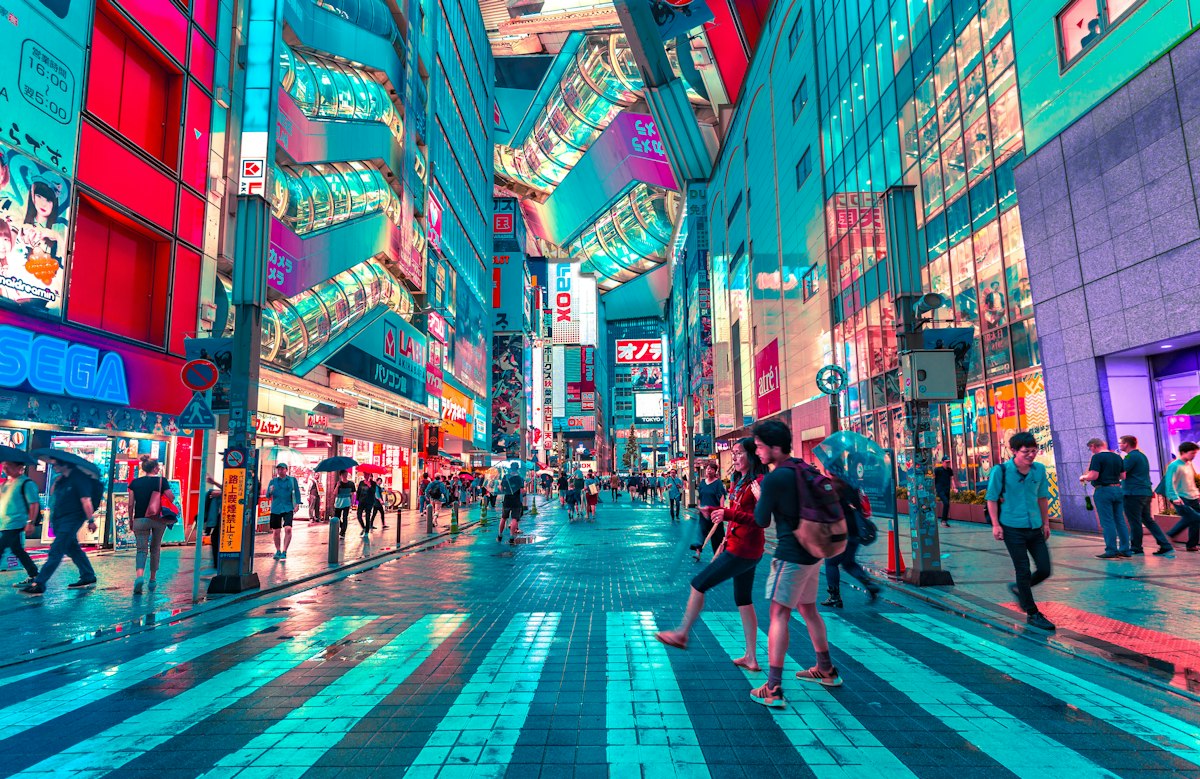
Japan is one of the world's great food and culture destinations — but it sits in that uncomfortable category of countries people assume will destroy their budget. The truth is more nuanced. Japan is not cheap. But it is not the financial black hole people fear either. Your daily spend depends almost entirely on whether you understand where the money actually goes.
This is a week-by-week breakdown of what a realistic Japan trip costs, based on the classic 2-week first-timer route: Tokyo, Hakone, Kyoto, Nara and Osaka. Not a theoretical minimum. Not luxury. Real numbers for real travellers.
🇯🇵 The Single Most Important Japan Budget Fact
Japan's convenience stores — 7-Eleven, FamilyMart, Lawson — sell genuinely excellent food for ¥150–400 per item. A breakfast of two onigiri and a coffee costs ¥400 ($2.70). Most budget issues in Japan come from not knowing this and eating every meal in restaurants instead.
The Japan Rail Pass — Your Biggest Upfront Cost
Before anything else, understand the Japan Rail Pass. This is the single item that separates travellers who overspend from those who don't.
- 14-day pass: ¥50,000 (~$330) — buy before you leave home, overseas price is lower
- What it covers: All Shinkansen bullet trains between cities, most express trains, some local buses
- Does it pay for itself? Yes — Tokyo to Kyoto alone is ¥14,000 each way ($93). Two trips cover nearly half the pass cost
- When to activate it: On the day you first take the Shinkansen — not on arrival day. If you spend 3 days in Tokyo first, activate it on the day you travel to Kyoto
Week One — Tokyo (Days 1–7)
Accommodation: What Tokyo Actually Costs
| Type | Location | Price/night | Verdict |
|---|---|---|---|
| Capsule hotel | Shinjuku / Asakusa | ¥3,500–5,500 ($23–37) | Great value |
| Budget guesthouse | Any neighbourhood | ¥6,000–9,000 ($40–60) | Solid |
| Mid-range business hotel | City-wide | ¥12,000–20,000 ($80–133) | Comfortable |
| Design hotel / boutique | Shibuya / Shinjuku | ¥25,000–45,000 ($167–300) | Splurge |
| Park Hyatt Tokyo | Shinjuku | ¥70,000+ ($467+) | Luxury |
Daily Food Costs — Week One Reality
The biggest shock for first-timers is that Japan's best food is often its cheapest. A bowl of ramen at a standing ramen shop costs ¥800–1,200 ($5–8). A plate of sushi at a conveyor belt restaurant runs ¥100–200 ($0.70–1.35) per plate. A lunch set at a neighbourhood restaurant — main, rice, miso soup, salad — is typically ¥850–1,200 ($5.70–8). The expensive food in Japan is fine dining, not everyday eating.
| Meal type | Cost | Example |
|---|---|---|
| Convenience store breakfast | ¥300–600 ($2–4) | Onigiri + coffee + yogurt |
| Standing ramen / soba | ¥700–1,100 ($4.70–7.40) | Most train station spots |
| Restaurant lunch set | ¥900–1,400 ($6–9.40) | Neighbourhood restaurants |
| Conveyor belt sushi | ¥1,200–2,500 ($8–17) | Depends on plate count |
| Restaurant dinner | ¥1,500–3,500 ($10–23) | Izakaya with drinks |
| Michelin ramen | ¥1,000–1,800 ($6.70–12) | Ichiran, Fuunji, Afuri |
Tokyo Entry Costs — The Ones That Add Up
- teamLab borderless / planets: ¥3,200 ($21) — book months ahead, sells out
- Shibuya Sky observation deck: ¥2,200 ($14.70) — book online, worth it
- Tokyo Skytree: ¥2,100–3,100 ($14–21) — optional, Shibuya Sky is better
- Senso-ji temple, Meiji Shrine, Shinjuku Gyoen: Free or ¥200–500 ($1.35–3.35)
- Tokyo National Museum: ¥1,000 ($6.70)
Week One Tokyo — Realistic Spending Summary
| Category | Budget (7 nights) | Mid-range (7 nights) |
|---|---|---|
| Accommodation | ¥35,000–52,500 ($233–350) | ¥84,000–140,000 ($560–933) |
| Food | ¥14,000–21,000 ($93–140) | ¥28,000–49,000 ($187–327) |
| Transport (IC card) | ¥5,000–8,000 ($33–53) | ¥5,000–8,000 ($33–53) |
| Attractions | ¥6,000–10,000 ($40–67) | ¥12,000–20,000 ($80–133) |
| Week 1 total | ¥60,000–91,500 ($400–610) | ¥129,000–217,000 ($860–1,447) |
Week Two — Hakone, Kyoto, Nara, Osaka (Days 8–14)
Hakone — The Ryokan Question
Hakone is where most Japan budgets take their biggest single hit — and it is usually worth it. A night in a traditional Japanese inn (ryokan) with a private onsen, 8-course kaiseki dinner and breakfast included is the single experience most Japan visitors say defined their trip. It costs ¥30,000–80,000 ($200–533) per person per night. You do not need to do this every night. One night in a ryokan, budgeted for carefully, fits most traveller budgets without breaking the trip.
Kyoto — Where the Real Costs Are
Kyoto is cheaper to stay in than Tokyo — good mid-range hotels run ¥10,000–18,000 ($67–120). The costs accumulate through temple entry fees (¥500–1,000 each, and Kyoto has 1,600 temples). The rule most experienced Japan travellers use: pick 4 temples maximum, go at the right time of day, and spend real time with them. Fushimi Inari is free. Kinkaku-ji is ¥500. Arashiyama bamboo grove is free (go at 6am). Budget ¥3,000–6,000 ($20–40) for Kyoto's temple circuit across 3 days.
Nara — Almost Free
Nara is a day trip from Kyoto (45 min, JR Pass covers it). Todai-ji temple is ¥800 ($5.35). The deer park is free. Kasuga-taisha shrine approach is free. A half-day in Nara costs almost nothing beyond the temple entry.
Week Two — Realistic Spending Summary
| Category | Budget (7 nights) | Mid-range (7 nights) |
|---|---|---|
| Accommodation | ¥28,000–49,000 ($187–327) | ¥70,000–126,000 ($467–840) |
| Ryokan night (1 night, per person) | ¥25,000 ($167) — choose budget option | ¥45,000–80,000 ($300–533) |
| Food | ¥12,000–18,000 ($80–120) | ¥25,000–42,000 ($167–280) |
| Temples / attractions | ¥5,000–8,000 ($33–53) | ¥8,000–15,000 ($53–100) |
| Week 2 total | ¥70,000–102,000 ($467–680) | ¥148,000–263,000 ($987–1,753) |
Full 2-Week Japan Budget — The Complete Picture
| Item | Budget Total | Mid-range Total |
|---|---|---|
| Japan Rail Pass (14-day) | ¥50,000 (~$330) — same for everyone | |
| Week 1 (Tokyo) | ¥60,000–91,500 ($400–610) | ¥129,000–217,000 ($860–1,447) |
| Week 2 (Hakone/Kyoto/Osaka) | ¥70,000–102,000 ($467–680) | ¥148,000–263,000 ($987–1,753) |
| Shopping / souvenirs | ¥10,000–20,000 ($67–133) | ¥30,000–80,000 ($200–533) |
| Total in-country (excl. flights) | ¥190,000–263,500 ($1,264–1,756) | ¥357,000–610,000 ($2,380–4,067) |
| Daily average per person | ¥13,500–18,800 ($90–125/day) | ¥25,500–43,600 ($170–290/day) |
💸 Where Japan First-Timers Overspend
Tokyo taxis start at ¥500 and a 20-minute ride easily hits ¥2,500–4,000 ($17–27). The same journey on the metro costs ¥200–280 ($1.35–1.90). Japan's public transport runs to the second — there is almost never a reason to take a taxi in a city.
Japan's restaurant dining is not expensive by Tokyo standards — but three restaurant meals a day at ¥1,000/¥1,500/¥2,500 adds ¥5,000 ($33) per day in food alone. Swap one meal per day for convenience store food and you save ¥700–1,000 daily across 14 days — that's ¥9,800–14,000 ($65–93) recovered.
Japan's department stores, streetwear shops, ceramics, whisky and stationery are extraordinary — and genuinely dangerous to a budget. Set a firm shopping number before you arrive (¥20,000–40,000 is realistic) and treat it as a fixed cost rather than an open-ended daily decision.
If you arrive in Tokyo and spend 3 days there before taking the Shinkansen, activating the 14-day pass on arrival wastes 3 days of validity. Activate it on the day you first board a Shinkansen — this single decision can save ¥6,000–10,000 ($40–67) of wasted pass value.
🇯🇵 Hotels for Every Japan Budget
All hotels →🔗 Essential Japan Links
🚂❓ Frequently Asked Questions
Budget travellers manage ¥13,500–18,800 per day ($90–125) using convenience stores, capsule hotels or budget guesthouses, and the Japan Rail Pass. Mid-range travellers spend ¥25,500–43,600 per day ($170–290) with hotel accommodation and restaurant dining.
Yes — significantly. The $200+ per day figure widely quoted online assumes mid-range accommodation plus restaurant dining for every meal. Budget travellers who use convenience stores, capsule hotels and the JR Pass consistently report $90–110 per day excluding flights.
The 14-day pass costs ¥50,000 (~$330) and must be bought before you leave home. It covers all Shinkansen journeys between cities. For a Tokyo-Kyoto-Osaka itinerary, it pays for itself with just one return Shinkansen journey — Tokyo to Kyoto is ¥14,000 each way without the pass.
Budget ryokan options start around ¥15,000–25,000 per person ($100–167) including dinner and breakfast. Mid-range is ¥30,000–50,000 ($200–333). Luxury ryokan run ¥80,000–200,000+ ($533–1,333). One night at a good ryokan in Hakone or near Kyoto is a genuinely life-changing experience worth budgeting for carefully.
Convenience stores (7-Eleven, FamilyMart, Lawson) sell excellent fresh food for ¥150–400 per item. A full breakfast runs ¥300–500 ($2–3.35). Standing ramen and soba shops near train stations cost ¥700–1,100 ($4.70–7.40). Lunch sets at local restaurants run ¥900–1,400 ($6–9.40). Japan's cheapest food is genuinely very good.
Yes — more than you'd expect. Many smaller restaurants, temples, local shops and vending machines are cash-only. Withdraw yen from 7-Eleven or Japan Post ATMs which reliably accept foreign cards. Take out ¥30,000–50,000 at a time to avoid repeated ATM fees. IC cards (Suica/Pasmo) loaded with cash cover all metro journeys and convenience store purchases.
📚 More Japan Guides
👉Is Japan Expensive? — Honest Cost GuideRead → 👉Japan 10-Day Itinerary — Perfect First-Timer RouteRead → 👉Japan 2-Week Itinerary for First TimersRead → 👉How Many Days Do You Need in Japan?Read → 👉Best Time to Visit Japan — Month by MonthRead →🛠️ Free Trip Planning Tools
Work out your exact budget
Check entry requirements
149 world currencies
Never forget anything again
Best month for any destination
We research every destination honestly — practical guides with no fluff and no sponsored opinions.
Found this useful? Share it 😊
Get Free Travel Tips Every Week
Honest destination guides, money-saving tips and first-timer advice — straight to your inbox.
No spam. Unsubscribe anytime.