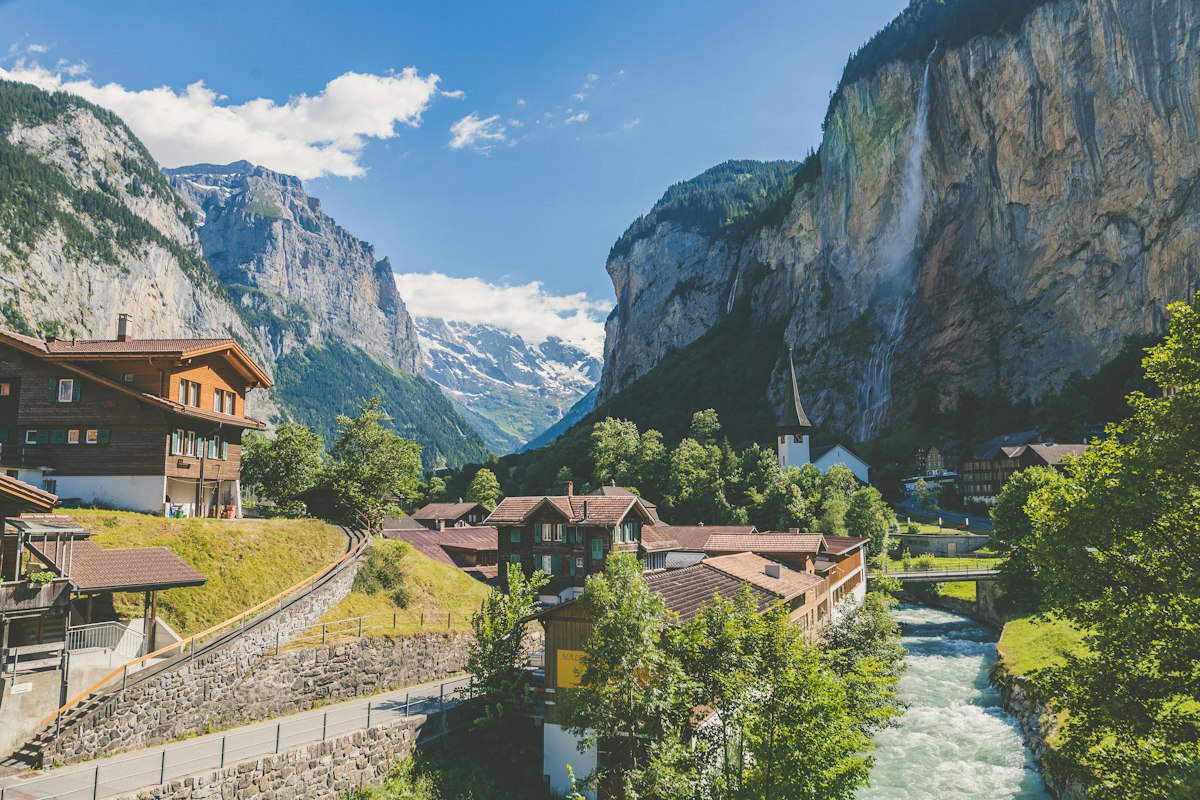
Switzerland has a reputation as one of the most expensive countries on earth — and that reputation is largely accurate. But "expensive" and "impossible on a budget" are different things. With the right strategy, Switzerland's extraordinary mountain scenery, pristine lakes and immaculate cities are genuinely achievable without the eye-watering costs most people assume.
This guide shows exactly how budget travellers manage to experience Switzerland's highlights without spending a fortune — where the unavoidable costs are, where the real savings exist, and a realistic daily budget you can actually plan around.
🇨🇭 Switzerland on a Budget — Is It Possible? The Honest Answer
Yes, with realistic expectations. Switzerland will never be a cheap destination, but with the right approach — free mountain views, supermarket picnics, and strategic rail pass use — a budget of $90-120 per day is achievable, far below the $300+ many assume is required.
Switzerland Cost Guide 2026
| Category | Budget | Mid-Range | Comfortable |
|---|---|---|---|
| 🛏️ Accommodation/night | $40–$80 (hostel) | $120–$250 | $300–$700+ |
| 🍽️ Supermarket meal | $8–$15 — Migros and Coop are everywhere | ||
| 🍽️ Restaurant meal | $20–$30 | $35–$60 | $80–$200+ |
| 🚂 Swiss Travel Pass (3 days) | CHF 244 (~$280) — unlimited trains, buses, boats | ||
| ⛰️ Mountain viewpoint (free) | Many hikes have free spectacular views — paid cable cars not always necessary | ||
| Daily total | $90–$130 | $200–$350 | $450–$900+ |
🏔️ Free and Low-Cost Mountain Experiences
Switzerland's most famous paid attractions — the Jungfraujoch, Glacier 3000, Mount Titlis — cost $80-150 USD per person. But many of Switzerland's most spectacular views are free or nearly free.
- Lake Geneva and Lake Lucerne shoreline walks — completely free, genuinely beautiful
- Free hiking trails — Switzerland has over 65,000km of marked hiking trails, many offering Alpine views without any cable car cost
- Lauterbrunnen Valley — 72 waterfalls visible from the valley floor, no payment required
- Regional trains with scenic routes — covered by a rail pass, often as spectacular as dedicated "scenic" trains
🎫 Swiss Travel Pass — Worth It?
The Swiss Travel Pass covers unlimited travel on trains, buses and boats nationwide, plus free entry to over 500 museums. For visitors planning to move between multiple cities and regions, it is genuinely good value — a single Zurich-Interlaken-Zermatt-Geneva loop booked point-to-point can cost more than the pass itself. For a single-city stay, skip it and buy individual tickets.
Suggested Budget Switzerland Itinerary
1–2
Hostel accommodation. Old town walk (free), Chapel Bridge, lakeside picnic. Free Mount Pilatus partial hike.
3–4
Train via Swiss Travel Pass. Lauterbrunnen waterfall valley (free). Hike to free viewpoints rather than paid cable cars.
5–7
Lake Zurich walk (free), old town, free museum entries with Travel Pass. Day trip to Rhine Falls.
🚫 Switzerland Budget Mistakes to Avoid
A restaurant meal in Switzerland can cost $30-60. Supermarket meals cost $8-15. Self-catering even half your meals dramatically transforms your budget without sacrificing the experience.
Switzerland's free hiking trails often deliver views nearly as spectacular as the paid cable car summits, at zero cost. Research free alternatives before automatically paying for every famous viewpoint.
Switzerland's limited budget accommodation sells out quickly, especially in summer. Book hostels and budget hotels well in advance — last-minute options are typically the most expensive remaining inventory.
🇨🇭 Budget-Friendly Hotels in Switzerland
All hotels →🔗 Essential Switzerland Links
🌐❓ Frequently Asked Questions
Yes, with realistic expectations. $90-130/day is achievable through hostels, supermarket self-catering, free hiking trails and a Swiss Travel Pass for multi-city trips.
Budget $90-130/day. Mid-range $200-350/day. Biggest savings come from self-catering and free hikes instead of paid cable cars.
Yes, for multi-city itineraries — unlimited trains, buses, boats plus free museum entry. For single-city stays, individual tickets are usually cheaper.
Supermarket self-catering (Migros, Coop) — $8-15 per meal vs $30-60 at restaurants. Self-cater most meals, treat yourself once a day.
May-June and September — lower accommodation prices than peak summer while still good for hiking and sightseeing.
📚 More Europe Budget Guides
👉Europe on a Budget 2026 — Complete Money-Saving GuideRead → 👉How to Travel Europe by Train — Complete Guide 2026Read → 👉Iceland Travel Guide for First Timers 2026Read → 👉Norway vs Iceland — Which Scandinavian Trip First?Read →🛠️ Free Planning Tools
Calculate your exact budget
Check your entry requirements
Best time to visit
What to pack for your trip
Convert to local currency
We research every destination thoroughly — honest, practical guides with no fluff, no sponsored opinions. Just real advice that helps you travel smarter.
Found this helpful? Share it! 😊
Get Free Travel Tips Every Week
Honest destination guides, money-saving tips and first-timer advice — every week.
No spam ever. Unsubscribe anytime.
📖 More Europe Guides
✅ Final Verdict
Switzerland on a budget requires strategy rather than compromise — self-cater half your meals, hike the free trails before paying for cable cars, and book a Swiss Travel Pass if you're moving between cities. Done right, you get the same lakes, the same Alps and the same immaculate towns for a fraction of what most travellers assume Switzerland costs. Start planning at smarttravelplannr.com 🇨🇭